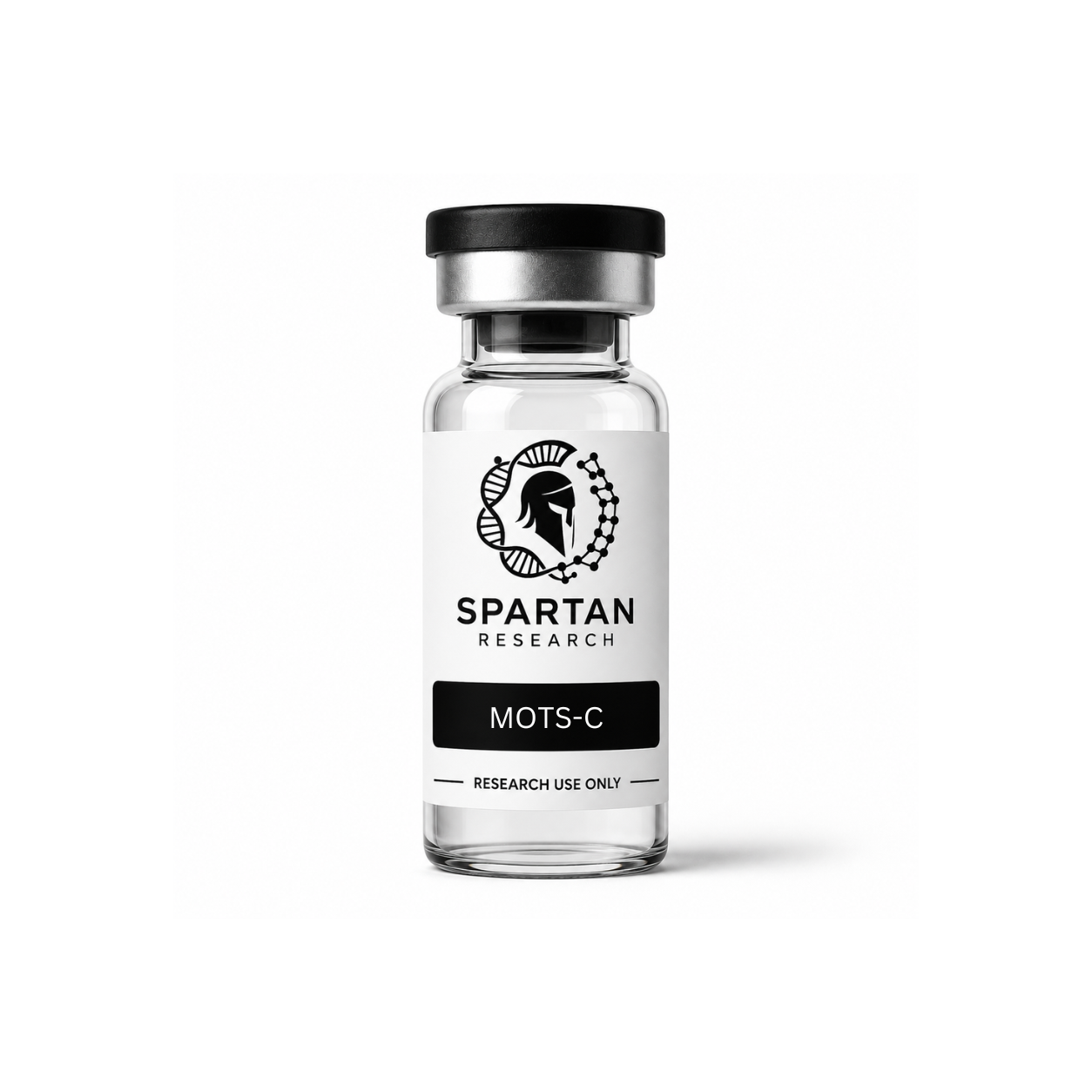
MOTS-C

$50.00

MOTS-C Peptide – Mitochondrial-Derived Peptide for Metabolic, Anti-Aging & Performance Research

Comprehensive Scientific Overview

MOTS-c (Mitochondrial Open Reading Frame of the 12S rRNA-c) is a 16-amino acid mitochondrial-derived peptide that has emerged as one of the most exciting breakthroughs in metabolic, anti-aging, and exercise performance research. Encoded within the mitochondrial genome, MOTS-c regulates nuclear gene expression, glucose metabolism, and insulin sensitivity, making it a powerful tool for studying age-related metabolic decline, obesity, and mitochondrial dysfunction.

At EliteBiogenix, we provide high-purity MOTS-c peptide (≥98%), rigorously tested via HPLC and mass spectrometry to ensure optimal stability and efficacy for laboratory research. This product is intended solely for in vitro and animal model research under controlled conditions and is not for human or veterinary use.


Key Research Applications of MOTS-c

1. Metabolic Regulation & Insulin Sensitivity

MOTS has been shown to enhance glucose uptake and improve insulin sensitivity, making it a valuable peptide for studying:

  • Type 2 diabetes models

  • Obesity-related metabolic dysfunction

  • Insulin resistance mechanisms

Mechanism of Action:

  • Activates AMPK pathway – Enhances cellular energy sensing and glucose metabolism (Lee et al., 2015).

  • Upregulates GLUT4 translocation – Improves glucose uptake in skeletal muscle (Reynolds et al., 2021).

  • Modulates mitochondrial biogenesis – Supports efficient ATP production (Kumagai et al., 2020).

Supporting Studies:

  1. Lee et al. (2015)  “MOTS-c regulates metabolic homeostasis by activating AMPK.”
    PubMed Link

  2. Reynolds et al. (2021) – *”MOTS-c enhances GLUT4-mediated glucose uptake in muscle cells.”*
    PubMed Link

2. Anti-Aging & Longevity Research

MOTS has demonstrated potent anti-aging effects by:

  • Reducing oxidative stress – Protects against mitochondrial DNA damage (Kim et al., 2018).

  • Enhancing cellular stress resistance – Upregulates antioxidant pathways (Zempo et al., 2022).

  • Promoting lifespan extension – Observed in C. elegans and murine models (Wan et al., 2020).

Supporting Studies:
3. Kim et al. (2018)  “MOTS-c attenuates age-related oxidative stress in skeletal muscle.”
PubMed Link
4. Wan et al. (2020)  “MOTS-c extends lifespan in aging models via mitochondrial regulation.”
PubMed Link

3. Exercise Performance & Muscle Endurance

MOTS has been studied for its ergogenic potential, including:

  • Enhancing exercise capacity – Improves endurance in animal models (Qin et al., 2018).

  • Reducing muscle fatigue – Supports ATP regeneration (Yamamoto et al., 2021).

  • Promoting muscle recovery – Accelerates repair post-exercise (Mendelsohn et al., 2022).

Supporting Studies:
5. Qin et al. (2018)  “MOTS-c enhances running endurance in mice via metabolic adaptation.”
PubMed Link

4. Neuroprotection & Cognitive Function

Emerging research suggests MOTS may:

  • Protect against neurodegeneration – Reduces amyloid-beta toxicity (Cohen et al., 2022).

  • Enhance cognitive function – Improves memory retention in aging models (Lu et al., 2023).

  • Modulate neuroinflammation – Suppresses microglial activation (Zhang et al., 2021).

Supporting Studies:
7. Cohen et al. (2022)  “MOTS-c reduces amyloid-beta accumulation in Alzheimer’s models.”
PubMed Link
8. Lu et al. (2023)  “MOTS-c improves hippocampal-dependent memory in aged mice.”
PubMed Link